
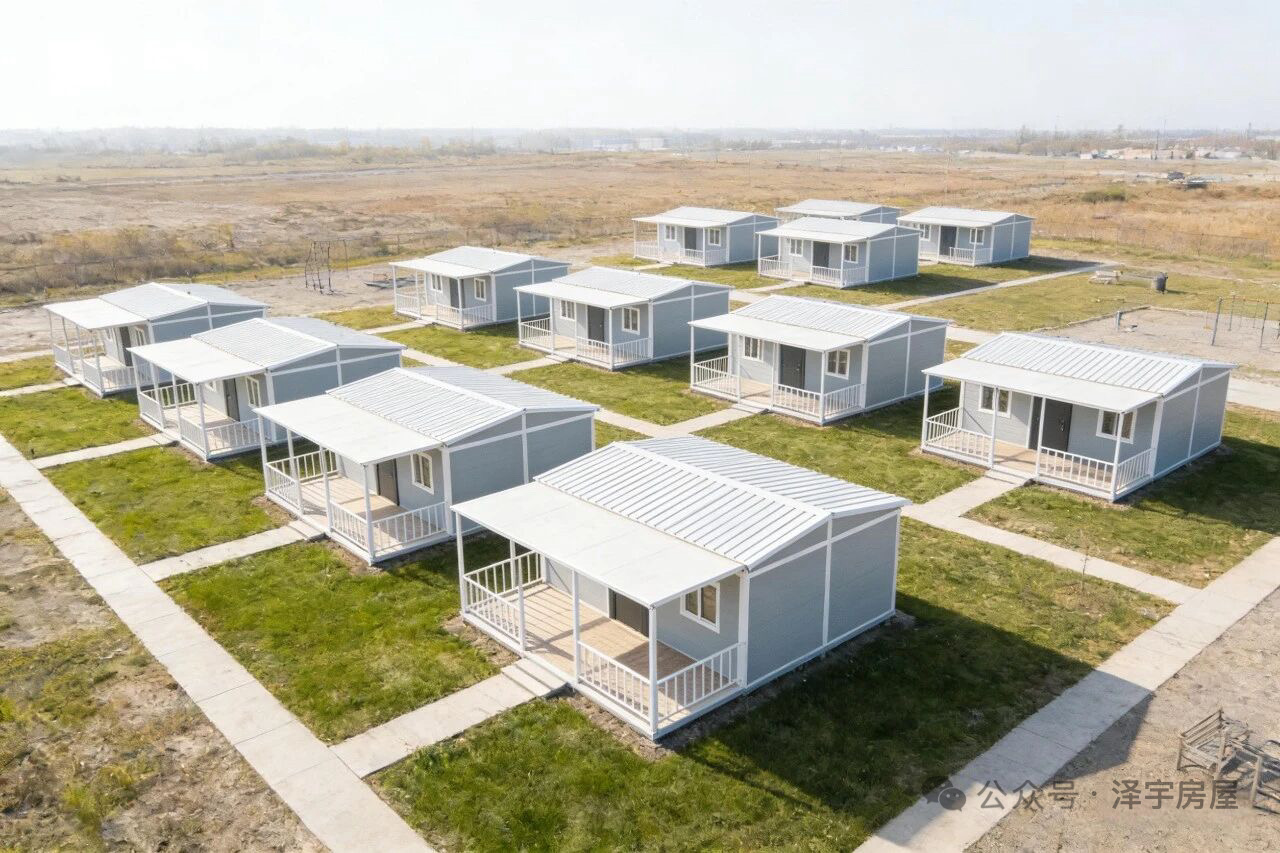
Recovery infrastructure · Local partnership
Rebuilding communities faster with prefabricated housing.
Adaptable homes and essential community buildings can help recovery programmes restore safety, education, healthcare and everyday life sooner, when factory capability is combined with responsible local delivery.
From shelter to recovery
After conflict or disaster, rebuilding is not only a question of replacing roofs and walls. Families need secure homes, children need places to learn, communities need spaces to gather, and health teams need clean, functional rooms from which to work. Prefabricated construction can help deliver that physical platform with a shorter and more controllable programme.
Read our guide to rapid disaster-response housingYARIS buildings are not presented as a universal emergency-shelter product. Structural design, insulation, fire safety, accessibility, sanitation, ventilation, foundations and services must be configured for the intended occupancy and verified under the destination country's laws, climate and approval process.
Why prefabrication can help
Move more work into a controlled production environment.
Speed comes from coordination and parallel work, not from skipping engineering or inspection.
Factory preparation
Frames, panels, openings and selected finishes can be produced in a repeatable sequence with documented quality checks.
Shorter site programme
Foundations, utilities and access planning can progress locally while the building package is prepared at the factory.
Planned logistics
Coordinated packing, container loading and installation sequences help partners organise phased delivery across multiple sites.
Repeatable units
Standard room types support batch production while layouts and finishes remain adaptable to households and institutions.
Reduced site fabrication
Less cutting and assembly at the destination can ease pressure where skilled labour, tools or weather windows are limited.
Phased recovery
A programme can begin with pilot buildings, validate local details, then expand through planned production batches.
The scale of the need
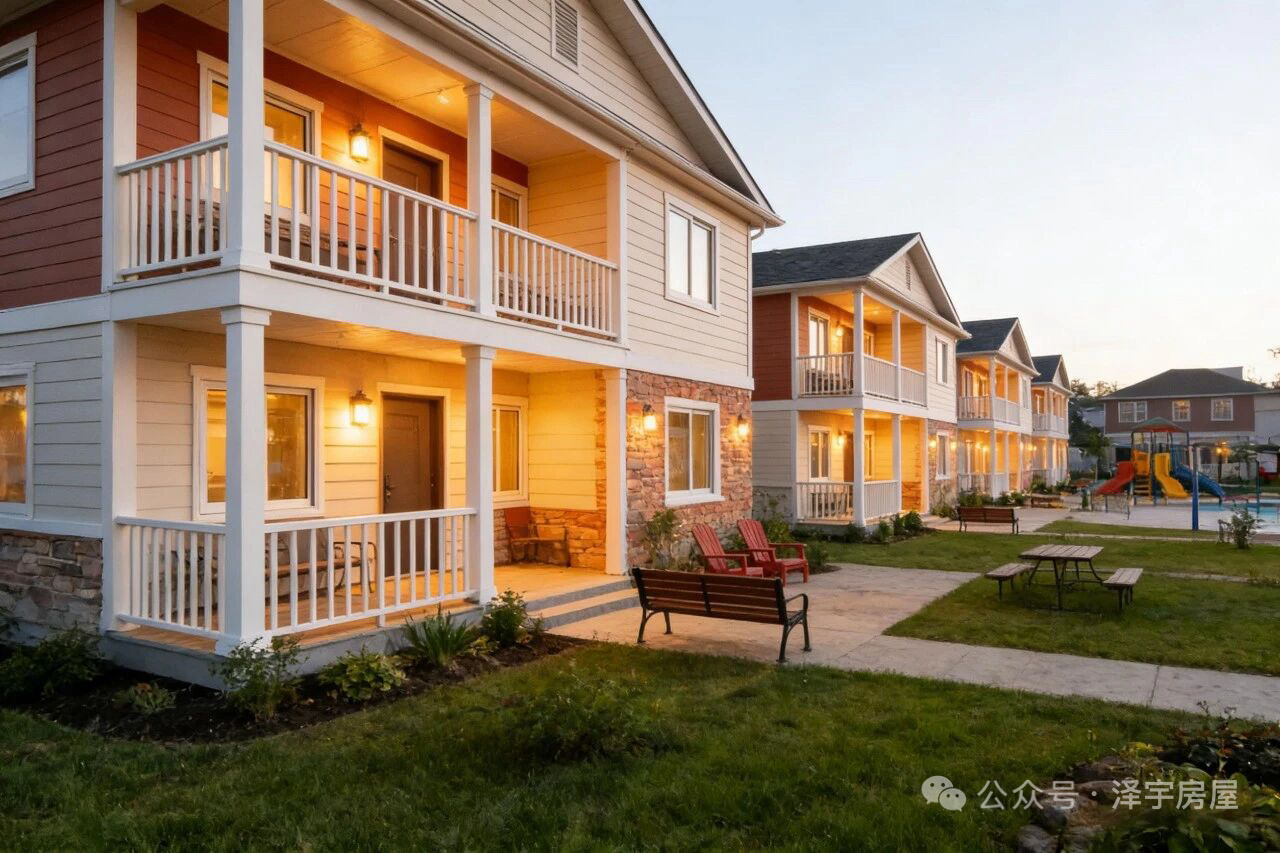
Reconstruction must restore both housing and community services.
The joint Ukraine Rapid Damage and Needs Assessment published in February 2025 estimated that 13% of the country's housing stock had been damaged or destroyed as of 31 December 2024, affecting more than 2.5 million households. It identified housing, education and health among the priority recovery sectors.
Recovery priorities are also extensive across Syria and Lebanon. UNDP's 2025 Syria reporting describes a transition from crisis response toward recovery and development, while UNHCR continues to coordinate shelter planning in Lebanon. Each setting has different institutions, risks, climates and procurement systems, so there is no responsible one-size-fits-all building package.
The practical opportunity for prefabrication is to give governments, humanitarian organisations and local developers a configurable platform that can be adapted, approved and delivered in stages.
Read the joint Ukraine RDNA4 summaryOne platform, several essential uses
Configure each building around the people it serves.
Shared manufacturing logic can support different plans, but every occupancy requires its own technical review.
Studios and multi-room plans with kitchens, bathrooms, storage and privacy appropriate to household needs.
Learning rooms, teacher spaces and sanitation blocks coordinated for safeguarding, daylight and accessibility.
Churches, prayer rooms and community halls with layouts respectful of local faith, culture and assembly requirements.
Consultation, waiting and support rooms designed with local health authorities for hygiene, privacy and clinical services.
Compact municipal, registration, aid-distribution and case-management spaces that can open close to communities.
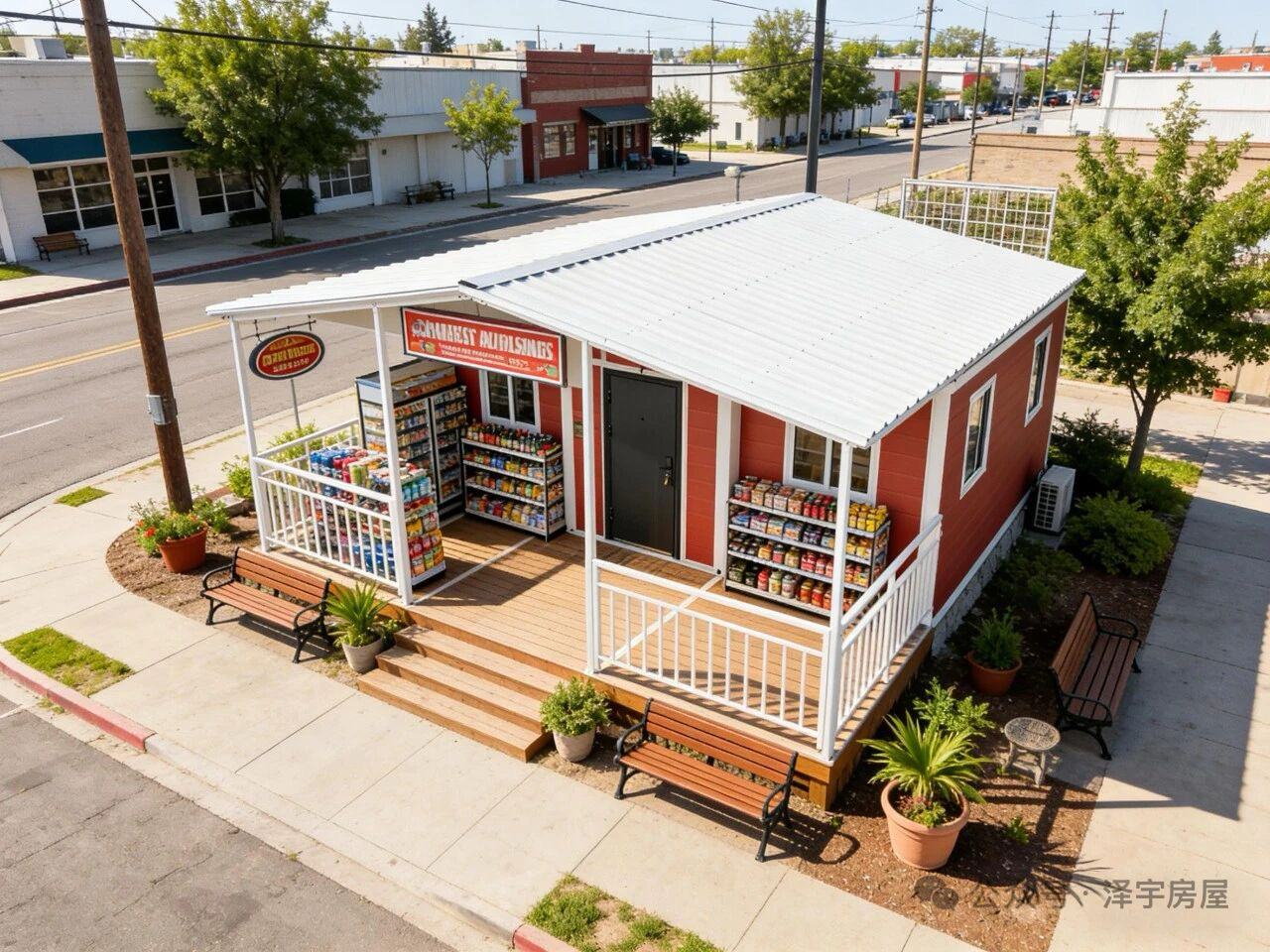
Small shops, workshops and livelihood spaces that help residents restore services and economic activity.
Cold-climate performance
For Ukraine and other cold regions, the envelope is a system.
Comfort in winter depends on more than adding a thicker panel. A cold-climate specification may combine project-specific insulation, controlled thermal bridges, airtight junctions, insulated windows and doors, roof and floor continuity, protected water routes, condensation analysis, ventilation and an efficient heating strategy.
Snow, frost, wind, seismic conditions and ground performance also influence the structure and foundations. YARIS can coordinate product options and technical information with the local design team, but a qualified local engineer must confirm loads, energy performance, fire strategy and code compliance before production.
Tell us the project location, design temperatures, target U-values, energy code, heating source, occupancy and utility conditions so the proposed wall, roof, floor, glazing and services can be reviewed as one building system.
Seeking overseas partners
Factory capacity becomes useful only when it is connected to trusted local delivery.
YARIS welcomes qualified partners in Ukraine, Syria, Lebanon and other recovery markets for responsible pilot projects and long-term programmes.
Manufacturing and export support
- Product-family and configuration review
- Layout, envelope and finish coordination
- Production planning and factory quality records
- Packing, loading and export-document support
- Installation information for the agreed system
- Batch planning for phased programmes
Approval and community delivery
- Needs assessment and stakeholder coordination
- Land, title and planning confirmation
- Local architecture, engineering and permits
- Customs, inland logistics and secure storage
- Foundations, utilities and trained installation
- Handover, maintenance and resident feedback
A responsible route from concept to community
Validate locally, then scale with evidence.
- 01Define the mission
Confirm users, occupancy, quantity, locations, programme, budget, donor or procurement requirements and long-term ownership.
- 02Set the performance brief
Document climate, structure, energy, fire, accessibility, sanitation, medical or educational standards and utility conditions.
- 03Approve a pilot
Coordinate drawings with local professionals, confirm the site and logistics plan, and inspect a representative unit before scaling.
- 04Build local capability
Train installation and service teams, define quality hold points, prepare spare parts and establish reporting procedures.
- 05Deliver in phases
Use verified details and community feedback to plan repeatable production, shipping and site handovers.
Project questions
Clear requirements make faster delivery possible.
Every recovery programme needs a defined technical, social and commercial brief.
How quickly can prefabricated reconstruction buildings be delivered?
Factory production and local site preparation can proceed in parallel, which can shorten the programme. The actual schedule depends on design approval, quantity, specification, production capacity, freight, customs, foundations, utilities, installation and inspections.
Can YARIS modular buildings be configured for cold climates?
Yes. Project-specific options can include upgraded insulation, improved air sealing, insulated windows and doors, protected utility routes and locally appropriate heating. The final envelope and services must be engineered against the destination climate, energy rules and local codes.
Can one building system support homes, schools, worship spaces and clinics?
A coordinated modular platform can support several layouts and uses, but occupancy, accessibility, fire safety, sanitation, ventilation and medical requirements differ. Every configuration must be reviewed and approved for its intended use by qualified local professionals and authorities.
What overseas partners is YARIS seeking?
YARIS welcomes discussions with qualified developers, contractors, distributors, NGOs, procurement organisations, architects, engineers and installation partners that can support local approvals, site delivery and after-sales service.
Build a responsible recovery partnership
Bring the local mission. We will bring the manufacturing platform.
Share the country, intended use, quantity, site conditions, climate brief, target programme and your local delivery capability. YARIS will review a practical first step with your team.